
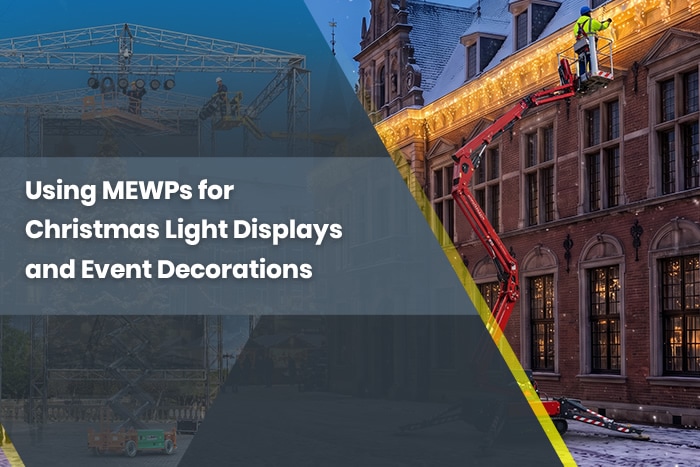
Christmas light displays, from council Christmas switch-ons and festive markets to light trails and seasonal attractions, depend on installing hundreds of lights and decorations safely and on time. Event organisers need suitable powered access equipment to reach lampposts, trees, overhead festoon lighting, entrance arches and large decorative structures. Scissor lifts, spider lifts, articulating booms, van-mounted platforms and truck-mounted platforms can all support different types of installation.
Quick Answer
Which MEWPs are used for Christmas light displays?
Scissor lifts and spider lifts can support work in markets, parks and pedestrian areas, while van mounts and truck mounts are useful for street decorations, lampposts and larger public displays. Plan the project in four phases: build, test, run and dismantle. Each phase needs suitable access, permissions and crowd control.
- Council Christmas switch-ons, light trails and festive markets need careful planning, suitable access equipment and clear installation schedules.
- Van-mounted and truck-mounted platforms can help with street lighting, lamppost decorations and town-centre displays.
- Spider lifts and scissor lifts can suit parks, pedestrian areas, stages and event structures, subject to site conditions.
- Public events require permissions, crowd management and suitable traffic controls.
- Qualified electricians should manage electrical connections and power distribution.
- Plan equipment hire for installation, maintenance and dismantling before the event opens.
Table of Contents
- Where Are MEWPs Used in Christmas Light Displays?
- Plan the Build in Phases
- Power, Cabling and Electrical Safety
- Permissions and Public Spaces
- Managing the Crowd and the Work Area
- Weather and Contingency
- Dismantling Efficiently
- Choosing Machines for Pedestrian Areas
- Working with Stakeholders
- Design Elements of a Good Display
- Maintaining the Display While It Runs
- Sustainability and Reuse
- Conclusion
- Get in Touch with AFI Rentals
- Frequently Asked Questions
Explore the Christmas MEWP Guides
These related articles provide further guidance on choosing access equipment and planning Christmas installations:
- Complete guide to Christmas decorations and lights using MEWPs
- Using MEWPs for indoor Christmas decorations
- Installing outdoor Christmas lights with cherry pickers
- Commercial Christmas decorations using MEWPs
- Large Christmas tree installation using MEWPs
- Which MEWP is best for Christmas decorations and light installation
- Cherry picker and MEWP hire costs for Christmas lights
- Safe Christmas decoration installation using MEWPs
- MEWP types for Christmas decorations: where each machine works best
Where Are MEWPs Used in Christmas Light Displays?
Public Christmas displays and seasonal events use access platforms in many locations. Common tasks include hanging festoon lighting between columns or buildings, wrapping trees and lampposts, installing overhead light canopies, fixing lighting to market structures and attractions, and positioning signage and decorative features.
Council Christmas switch-ons and town-centre light trails may involve several installation points across roads, pavements and public spaces. Event organisers need to consider the working height, machine access and the time available at each location.
| Display Type | Typical Task | Machine To Consider |
| Christmas market | Overhead festoons, stall canopies, entrance arches | Scissor lift or spider lift |
| Town-centre light trail | Street furniture, lampposts, tree lighting | Van mount or articulating boom lifts |
| Park or garden attraction | Tree lighting and light sculptures | Spider lift |
| Seasonal attraction or grotto | Roof and facade decorations, signage | Scissor lift or boom |
| Large public building or square | Facade lighting and feature displays | Truck mount or telescopic boom lifts |
Base the final machine choice on the site survey, required working height, ground conditions, and access restrictions.
Plan the Build in Phases
A successful event display follows a schedule that works backwards from the opening date. A useful model has four phases:
1. Build. Install structures, fixings and lighting runs while the site is closed.
2. Test. Power and check every circuit before removing the machines, with time to fix faults.
3. Run. Keep access to the display for repairs and for any changes during the event.
4. Dismantle. Reverse the build, with a removal plan that matches the machines used for installation.
“Leave a testing buffer between the end of the build and the opening. The display is not finished when the last light goes up, only when every circuit has been proven to work.”
Power, Cabling and Electrical Safety
Large displays need properly designed power distribution, and a qualified electrician should do the work. MEWPs help by giving safe, stable access to run cables and fit lights at height. Keep cables off walkways, protect connections from weather, and plan where power will come from, whether from the mains or from temporary supplies such as generators.
Permissions and Public Spaces
Public events typically require permission from the landowner or local authority. That may cover road use, parking a machine on the highway, temporary structures, event licensing and traffic management. In England and Wales, local Safety Advisory Groups often review larger events. Start these conversations early, because approvals can take time.
Managing the Crowd and the Work Area
Machines and crowds do not mix. Where possible, build the display before the public arrives. If work must continue while people are around, establish exclusion zones with barriers and signs, use stewards or ground personnel, and avoid lifting or overhead work above areas where people are passing.
“Plan access for the repairs as well as the build. A string of lights failing on opening weekend needs a machine that can reach it quickly and a team that can work safely.”
Weather and Contingency
Outdoor events run into weather. Wind, rain and frost can stop work at height or delay a schedule. Build spare days into the programme, have a back-up machine option where the budget allows, and agree in advance who decides when conditions are too poor to work.
Dismantling Efficiently
Dismantling is often done in a hurry because the venue or road needs to reopen. Record where fixings were placed, group cables and lights by section as they come down, and book the machines for the removal dates when you book the installation. The 7 Day Service can help where work runs into a weekend.
Choosing Machines for Pedestrian Areas
Pedestrian precincts and parks call for compact, low-impact machines. Spider lifts have a small footprint and spread their weight over tracks and stabilisers, so they suit paved squares and grass. Vehicle-mounted platforms are quick to set up but need a safe standing position and often traffic management. Truck mounts suit tall civic buildings and long frontages where the road can be closed or managed.
Working with Stakeholders
Event displays involve several parties: the organiser, the landowner or council, electricians, security, stewards and the access contractor. Agree who is responsible for what, share the schedule with everyone and name one person who can make decisions on the day. Clear communication prevents delays far more often than extra equipment does.
Design Elements of a Good Display
A successful Christmas display should look attractive while remaining practical and safe for visitors.
- A clear focal point: Use a large Christmas tree, illuminated arch or light tunnel to create a central attraction.
- Lighting at different heights: Combine ground-level features with overhead lighting to create depth.
- Consistent colour and style: Use a coordinated design so the display feels connected across the site.
- Safe routes: Make sure lighting helps visitors identify paths, exits and steps without hiding hazards.
- Accessible spaces: Keep pedestrian routes and access points clear for visitors with different mobility needs.
Plan the design before booking equipment. This helps the installation team understand the working heights, access points and machine requirements.
Maintaining the Display While It Runs
Christmas displays need regular checks throughout the event. Agree who will inspect the site, how faults will be reported and how repairs at height will be arranged.
A daily inspection can help identify failed lights, loose fixings and damaged cables before they become larger problems. If repairs require access equipment, plan the machine hire and working area.
For busy council events and light trails, having a clear fault-reporting process helps organisers respond quickly and reduce disruption to visitors.
Sustainability and Reuse
Large displays use a lot of energy and materials. LED lighting, timers and light sensors reduce power use, and well-labelled storage lets decorations be reused year after year. Planning the display around reusable structures and fixings also reduces waste during dismantling.
Conclusion
Christmas light displays are organised projects, not just decorations. Council switch-ons, festive markets and light trails all need a planned installation schedule, suitable access equipment, permissions and public safety controls.
Choose machines based on the site and working height, arrange electrical work with qualified professionals, and plan for testing, maintenance, and dismantling. With the right equipment and preparation, event organisers can create festive displays while keeping installation work controlled and efficient.
Get in Touch with AFI Rentals
Planning a market, light trail or seasonal attraction? Share the site, the dates and the access constraints with the AFI team, and ask about current hire offers. Contact AFI Rentals or find your nearest depot.FAQs
What permissions do I need for a Christmas light display in a public space?
Requirements depend on the location and type of display. You may need permission from the landowner or local authority, as well as approvals for road use, temporary structures, traffic management or event licensing. Contact the relevant council early to confirm what is required.
Can MEWPs be used on grass at a park event?
Yes, where the machine is suitable for the ground conditions and the site has been assessed. Spider lifts may be considered for some park installations, but check the ground strength, surface condition, machine weight and stabiliser requirements. Avoid operating on unsuitable soft or waterlogged ground.
How early should we start building a Christmas light display?
Start planning as early as possible, allowing time for design approval, permissions, equipment booking and site preparation. Work backwards from the event opening date and include enough time for installation, testing and any repairs.
How do we keep the public away from the work area?
Use barriers, signs and stewards to establish a clear exclusion zone. Where possible, schedule overhead work before the public arrives. Keep pedestrian routes and emergency exits clear while access equipment is operating.
Which machine suits lamppost-mounted Christmas decorations?
A van-mounted cherry picker or suitable articulating boom lift may be appropriate, depending on the working height, location and available standing space. Traffic management or road restrictions may also be required.
What happens if bad weather affects the installation?
Stop work if weather conditions exceed the machine's operating limits or make the task unsafe. Include contingency time in the schedule, follow the manufacturer's instructions, and adhere to the site risk assessment.
Do we need a standby machine for a large Christmas event?
For a major event with a fixed opening date, it may be worth arranging a backup equipment option. Discuss availability and contingency arrangements with the hire provider before the installation starts.
Can festoon lights be hung between buildings?
They can be installed where building owners approve the arrangement, and the fixing points can support the loads involved. The installer should also consider cable support, electrical safety and whether the installation crosses a public route or highway.
How can we dismantle a Christmas light display quickly after an event?
Plan dismantling before installation begins. Record fixing locations, label lighting sections, and arrange suitable access equipment for the removal dates. Booking the machines in advance can help avoid last-minute availability problems.
Can volunteers operate MEWPs at community Christmas events?
Only people who are trained and competent to operate the specific machine should operate it. Volunteers without suitable training should not use a MEWP. Arrange for a competent operator and follow the equipment manufacturer's instructions and site safety procedures.