
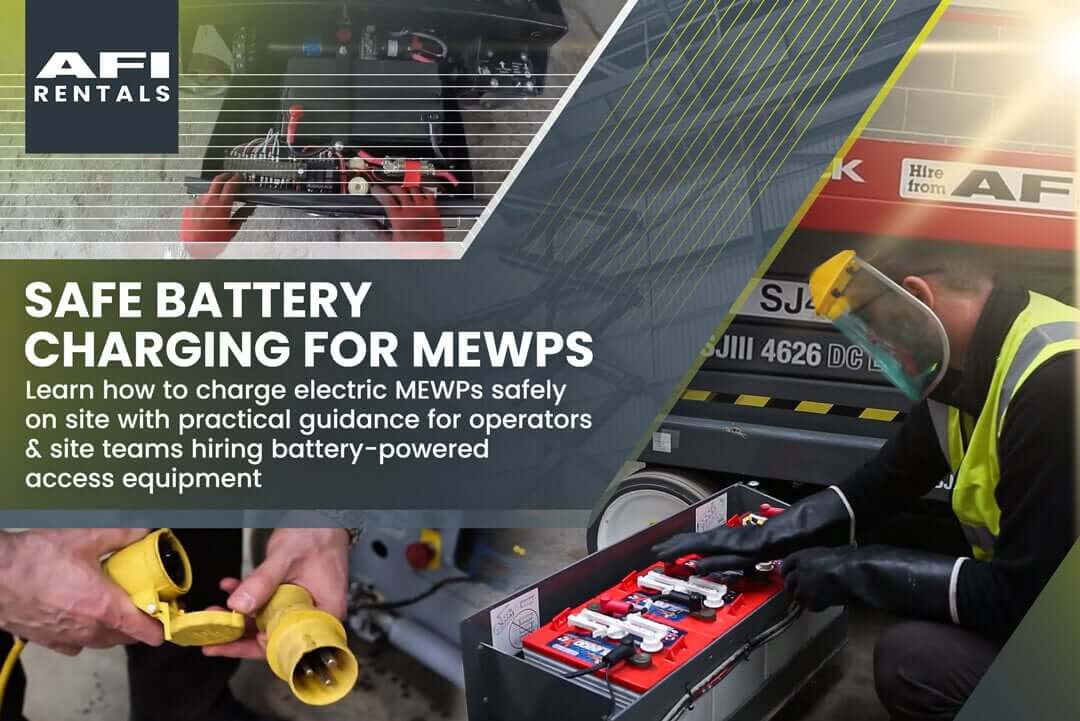
Battery-powered MEWPs are becoming increasingly common across UK construction sites, industrial facilities, warehouses and infrastructure projects. Electric and hybrid access platforms help reduce emissions, noise and fuel consumption while supporting indoor and low-emission working environments. As more businesses switch to electric-powered access equipment, battery charging safety is becoming a key consideration for operators, facilities teams and site managers.
Incorrect charging procedures can reduce battery lifespan, damage equipment, and increase fire risks on site. Following safe charging guidance is essential for maintaining machine performance and supporting safe operations.
IPAF’s guidance on the safe use and maintenance of batteries fitted to MEWPs provides practical recommendations for battery charging, electrical safety and lithium-ion battery management.
Further guidance is available here:
Quick Summary
MEWP batteries should always be charged using the manufacturer-approved charger in a clean, designated charging area away from ignition sources. Operators should inspect charging cables before use, avoid using damaged extension leads, and follow IPAF guidance for lithium-ion and lead-acid battery charging procedures to reduce fire risks and maintain safe machine operation.
Why Is Safe MEWP Battery Charging Important?
Charging systems are critical to the safe operation of electric boom lifts, electric scissor lifts and other battery-powered access platforms. Unsafe charging practices can lead to:
- Overheating
- Electrical faults
- Fire risks
- Reduced battery performance
- Unexpected downtime
- Permanent battery damage.
For hire customers, safe charging procedures also help maintain machine availability throughout the hire period and reduce avoidable repair costs.
Where Should Electric MEWPs Be Charged?
According to IPAF guidance, batteries should be charged in a designated area away from ignition sources. Charging areas should:
- Be clean and organised
- Minimise trip hazards
- Prevent cable damage
- Allow safe access around the machine
- Be suitable for the battery type being charged.
Lead-acid batteries should always be charged in a well-ventilated area because hydrogen gas can be released during charging. Lithium-ion batteries do not release hydrogen gas during charging, but operators should still consider fire safety and emergency access within charging areas.
What Should Operators Check Before Charging A MEWP?
Are Charging Leads Damaged?
Before charging begins, operators should inspect:
- Charger cables
- Extension leads
- Plugs and connectors
- Cable insulation.
Damaged cables can increase the risk of electrical hazards and should be reported immediately.
Is The Correct Charger Being Used?
Lithium-ion batteries should only be charged using OEM-approved chargers compatible with the battery system. Using incompatible charging equipment can increase the risk of overheating, battery damage or fire.
Are Extension Leads Safe?
Extension leads should:
- Be fully uncoiled during use
- Be kept as short as possible
- Avoid water exposure
- Be routed away from traffic routes.
Multiple connected extension leads should be avoided wherever possible.
How Are Lithium-Ion MEWP Batteries Different?
Lithium-ion battery systems are increasingly used across modern powered access fleets because they offer:
- Faster charging times
- Longer operating cycles
- Reduced maintenance
- Lower emissions
- Improved efficiency.
IPAF guidance highlights the importance of Battery Management Systems (BMS) within lithium-ion battery packs. The BMS helps:
- Monitor battery temperature
- Manage charging cycles
- Prevent overcharging
- Protect against overheating
- Monitor voltage levels.
Operators should never bypass or modify battery management systems.
Can Operators Use MEWPs While Charging?
MEWPs should not be operated while charging unless specifically permitted by the manufacturer. Operators should always refer to the machine operating manual and site safety procedures before attempting to move or operate equipment connected to charging systems.
What Is Opportunity Charging?
Opportunity charging refers to charging batteries during short breaks or downtime periods throughout the working day. This approach is commonly used with lithium-ion MEWPs because these battery systems can accept faster charging cycles without reducing battery lifespan.
For busy projects, opportunity charging can help maximise machine uptime and improve productivity.
Hiring Electric MEWPs From AFI-Rentals
AFI-Rentals supplies battery-powered access platforms for indoor and outdoor working at height projects across the UK. Our electric and hybrid MEWP fleet supports:
- Construction projects
- Warehousing and logistics
- Facilities management
- Industrial maintenance
- Infrastructure works.
We also support customers with:
- Nationwide delivery
- Technical support
- Flexible hire options
- IPAF guidance
- Access equipment expertise.
Explore electric powered access hire here:
FAQs
Can lithium-ion MEWP batteries overheat during charging?
Yes. Incorrect charging equipment, damaged batteries or unsafe charging conditions can increase overheating risks.
Should lead acid MEWP batteries be charged in ventilated areas?
Yes. Lead-acid batteries can release hydrogen gas during charging, so ventilation is important.
Can extension leads be used to charge electric MEWPs?
Yes, but they should be suitable for the load, fully uncoiled and protected from water and damage.
Why is the Battery Management System important?
The Battery Management System helps monitor battery safety, charging performance and temperature control in lithium-ion batteries.
What should operators do if charging equipment is damaged?
Damaged charging equipment should not be used and should be reported immediately.
Where can I find official MEWP battery charging guidance?
IPAF provides guidance on battery charging and maintenance here: