
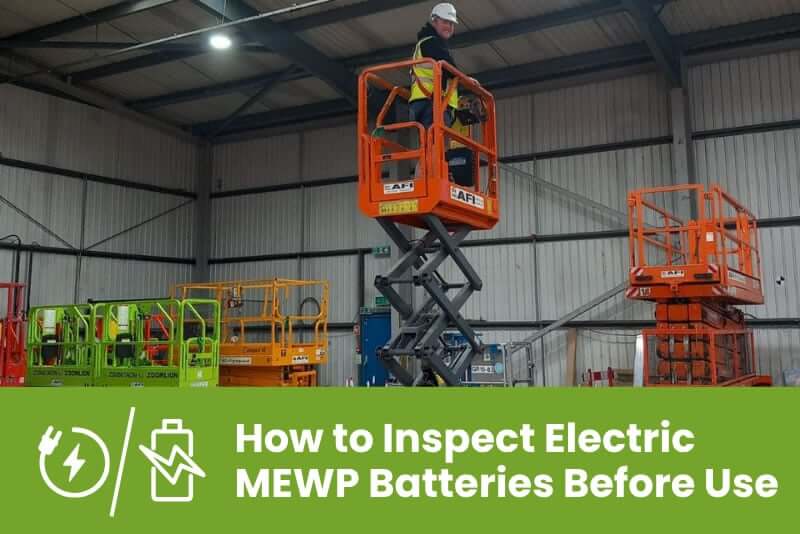
Battery-powered MEWPs are now widely used across construction, facilities management, warehousing, industrial maintenance and infrastructure projects throughout the UK. Their lower emissions, quieter operation and improved efficiency make them an increasingly popular alternative to diesel-powered access equipment.
As more businesses hire electric access platforms, battery safety and operator inspections are becoming more important on site. A damaged or poorly maintained battery system can affect machine performance, create operational downtime and increase safety risks for operators and nearby workers.
According to IPAF's guidance on the safe use and maintenance of batteries fitted to MEWPs, battery checks should form part of every operator’s pre-use inspection process before operating the machine.
Further guidance is available from IPAF here:
https://www.ipaf.org/en-gb/resource-library/safe-use-maintenance-batteries-fitted-mewps
Before using an electric MEWP, operators should inspect the battery system for visible damage, loose cables, corrosion, electrolyte issues, charger damage and unsecured battery components. IPAF recommends that battery inspections form part of every MEWP pre-use check to help reduce fire risks, equipment damage and unplanned downtime while maintaining safe operation on site.
Why Are Electric MEWP Battery Inspections Important?
Battery systems power critical machine functions on electric boom lifts, scissor lifts and other battery-powered access equipment. If faults go unnoticed, operators may experience reduced operating time, charging problems or complete machine failure during use.
Pre-use inspections also help identify issues such as:
• Damaged charging cables
• Corroded battery terminals
• Loose electrical connections
• Low electrolyte levels in lead acid batteries
• Battery casing damage
• Signs of overheating
For businesses hiring powered access equipment, these checks also help protect the machine during the hire period and reduce avoidable repair costs.
What Should Operators Check Before Using an Electric MEWP?
IPAF recommends carrying out battery inspections before every shift and in accordance with the manufacturer’s operating instructions.
Are The Batteries Secure?
Operators should check that the batteries are securely fitted and protected against movement or vibration during operation.
Loose battery units can damage internal components and electrical connections over time, particularly on rough terrain sites or during transportation.
Are There Signs Of Corrosion Or Damage?
Battery terminals and surrounding areas should be visually checked for:
• Green or white corrosion deposits
• Cracked casings
• Fluid leaks
• Burn marks
• Swollen battery housings
Corrosion around terminals can reduce electrical performance and increase the risk of equipment faults.
If operators identify visible damage, the MEWP should not be used until inspected by a competent person.
Are Battery Cables And Chargers In Good Condition?
Damaged charging leads and exposed wiring can create serious electrical hazards.
Operators should inspect:
• Battery charger cables
• Connector plugs
• Battery leads
• Cable insulation
• Charging points
Any exposed wires, cuts or overheating marks should be reported immediately.
Do Lead Acid Batteries Have Correct Electrolyte Levels?
Flooded lead acid batteries require electrolyte checks before operation.
According to IPAF guidance, operators should inspect electrolyte levels in a well-ventilated area away from ignition sources. Batteries should only be topped up using distilled or de-ionised water.
Lithium-ion batteries, AGM batteries and gel batteries do not require electrolyte top-ups, but they should still be inspected for damage and overheating.
What PPE Should Be Used During Battery Inspections?
Battery inspections should always be carried out using suitable PPE.
IPAF recommends:
• Chemical-resistant gloves
• Eye protection or safety goggles
• Safety footwear
Additional PPE may be required depending on the battery type and site conditions.
Why Is Battery Isolation Important During Inspections?
Battery isolation systems help reduce electrical risks while carrying out checks or maintenance.
Depending on the machine, isolation systems may include:
• Battery isolator switches
• Disconnect plugs
• Anderson plugs
Operators should always follow the manufacturer’s guidance before opening battery compartments or inspecting electrical systems.
What Happens If Battery Problems Are Ignored?
Ignoring battery issues can lead to:
• Unexpected machine downtime
• Reduced battery lifespan
• Charging failures
• Electrical faults
• Fire risks
• Expensive repair costs
For hire customers, reporting battery concerns early also helps AFI-Rentals support machine uptime and site productivity throughout the hire period.
Hiring Electric MEWPs With AFI-Rentals
AFI-Rentals supplies a wide range of battery-powered MEWPs for indoor and outdoor working at height applications across the UK.
Our electric fleet includes:
• Electric scissor lifts
• Electric boom lifts
• Hybrid access platforms
• Low-emission powered access solutions
We also support customers with:
• IPAF training guidance
• Operator safety support
• Nationwide delivery
• Technical assistance
• Flexible hire periods
Explore electric MEWP hire solutions here:
https://www.afi-rentals.co.uk/
FAQs
How often should electric MEWP batteries be inspected?
Electric MEWP batteries should be inspected before every shift as part of the operator’s pre-use inspection routine.
Can operators inspect lithium-ion MEWP batteries themselves?
Operators can carry out visual pre-use inspections, but repairs and maintenance should only be completed by competent personnel following manufacturer guidance.
What are the signs of a damaged MEWP battery?
Common warning signs include swelling, corrosion, overheating, fluid leaks, damaged cables and reduced operating performance.
Do all MEWP batteries require electrolyte checks?
No. Electrolyte checks are typically required for flooded lead acid batteries only. Lithium-ion, AGM and gel batteries are generally sealed systems.
What should operators do if battery damage is found?
The MEWP should be taken out of use and reported immediately to the site supervisor or hire provider.
Where can I find official guidance on MEWP battery safety?
IPAF provides guidance on the safe use and maintenance of batteries fitted to MEWPs here:
https://www.ipaf.org/en-gb/resource-library/safe-use-maintenance-batteries-fitted-mewps